
Electrical Fault Repair Paddington
A safety switch that keeps tripping or a power point that has gone dead means something is wrong in the wiring. A licensed electrician can trace it and fix the cause.
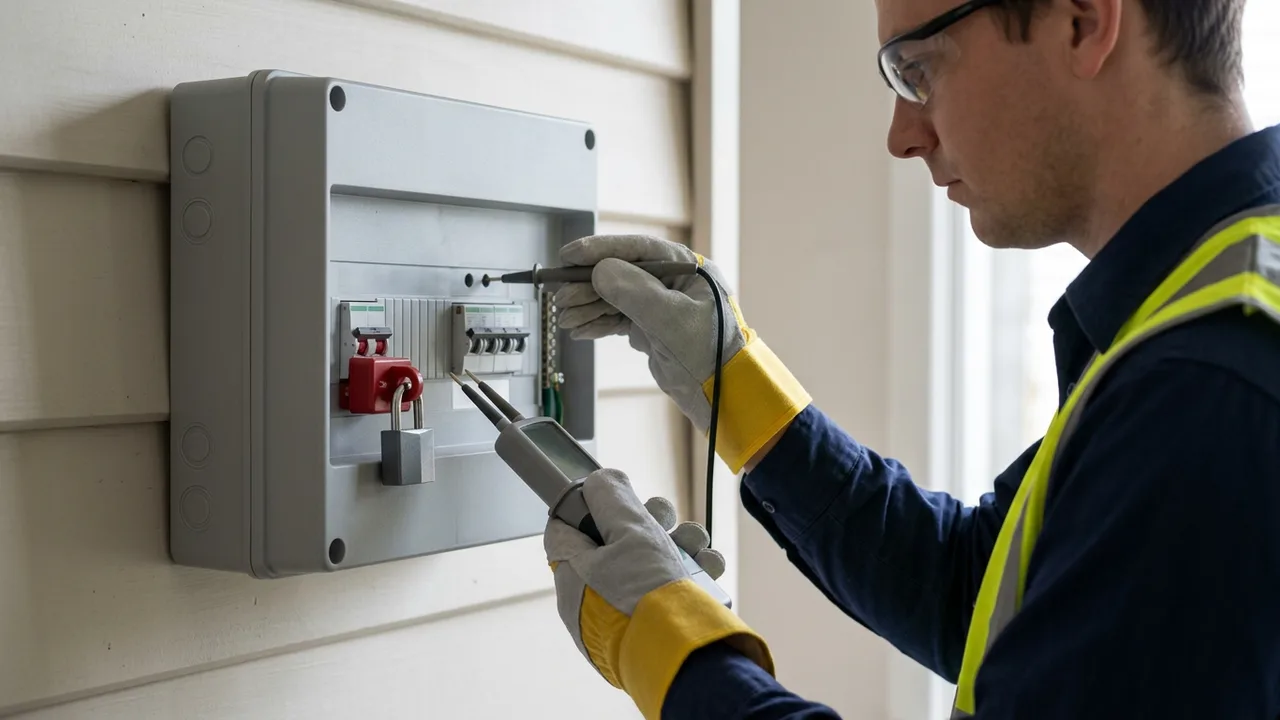
An electrical fault repair in Paddington means finding why the power keeps dropping out, not just flicking the switch back on. A circuit that trips again and again is protecting you from something real. In an older Queenslander the cause can sit behind a timber wall or up in the roof space, so it takes testing to reach it.
Electrical fault repair Paddington: why a circuit keeps tripping
A circuit keeps tripping because something on it is faulty or overloaded, and the switch is cutting the power to protect you. Resetting it only buys time. If the cause is still there, the switch will drop out again, often at the worst moment.
Three causes sit behind most trips. An overloaded circuit has too many appliances pulling power at once. A short circuit happens when live and neutral wires touch where they should not. An earth fault sends current leaking out of the wiring, which is exactly what a safety switch watches for.
Electrical fault finding in older Queenslander homes
Many older Queenslander homes have been rewired in stages over the decades. A new power point added to old cable, a join hidden in a wall, and insulation that has dried out and cracked all raise the odds of a fault.
Timber floors and lined walls make the search harder. Cables run under the house, through narrow roof spaces and inside walls nobody wants cut open. An electrician used to character homes knows where cables tend to run and how to reach them with as little damage as possible.
What a dead power point can tell you
A dead power point is usually a tripped circuit or a poor connection behind the faceplate. A joint that has worked loose can spark inside the wall and heat up, which is how scorched fittings and burning smells begin.
A dead point that is warm to the touch, discoloured or crackling should be treated as a hazard.
How an electrical fault is found and fixed
Fault finding is a process of elimination. The electrician starts with your account of what happens, then tests the wiring and connected appliances one at a time. Sometimes the culprit is an ageing fridge or hot water element leaking current.
A fault that comes and goes is caught by testing the circuit under load while the suspect joints are checked.
Once the faulty section is found, the repair is usually targeted: a new fitting, a remade joint or a replaced length of cable. Replacing a whole switchboard without locating the fault would not cure it, so the cause should be named before any bigger job is proposed.
When installation work is completed, a Queensland contractor must give you a certificate of testing and compliance.
What you can do yourself and what needs a licensed electrician
In Queensland a homeowner's own electrical work stops at small jobs like replacing a bulb or a fuse and resetting a tripped breaker or safety switch. Opening a power point, tracing cable or touching the switchboard is work for a licensed electrician.
If a switch resets and holds, you may have had a one-off overload. If it trips again straight away, leave it off and let a licensed specialist find the cause. Forcing a switch back on lets a fault keep generating heat.
What affects the cost of a fault repair
The price depends mostly on how long the fault takes to find and how hard the wiring is to reach. A loose joint at a visible power point is a short job. A fault buried in the wall of an old timber house, or one that appears only now and then, takes more testing.
Fittings are cheap, while time and access are not. A clear price before work starts shows what the job involves, and it should cover the fix as well as the diagnosis.
When a fault is an emergency
Call 000 if you see smoke or flames, or if someone has received an electric shock. A burning smell, a hot or scorched power point, or sparking also calls for turning off the affected circuit at the switchboard and getting an electrician in promptly.
A tripping switch with no other signs is less dramatic but still worth fixing soon, since the fault behind it will not clear on its own.
How it works
-
Listening to what has been happening
What trips, when it trips and what was running at the time often narrows the search before any tool comes out.
-
Testing the circuit
The electrician isolates each circuit and tests the wiring and appliances on it.
-
Opening up the suspect point
Fittings, joints and switchboard connections are inspected for heat damage, looseness and worn insulation.
-
A clear price, then the repair
The cause and the fix are priced before wiring is touched, and then the repair is made.
-
Retesting and paperwork
The circuit is tested again under load. Installation work finishes with a certificate of testing and compliance.
Scope in detail
- Tripping circuits and safety switches A switch that drops out repeatedly is reacting to a fault, and the fix is to find what sets it off.
- Dead power points and dead circuits The switchboard shows whether the dead points share a circuit, which tells the electrician where testing should begin.
- Flickering or dimming lights Lights that dip when an appliance starts can point to a poor connection or an overloaded circuit.
- Burnt or scorched fittings Discolouration shows heat has built up at a connection and needs attention straight away.
- Older wiring in character homes Aged insulation and past patch jobs cause faults in older houses, so cables are tested before anything is replaced.
Electrical fault finding and repairs options
- Circuit-by-circuit testing Working through the house one circuit at a time, which suits a place with several circuits and a mix of old and new cable.
- Appliance leakage checks Testing items such as a fridge or hot water element, since an ageing appliance can leak current and trip a switch.
- Joint and cable repair Remaking a loose or badly made joint, or replacing a damaged length of cable, once the fault is located.
- Fitting replacement Fitting a new power point or switch where heat or wear has done damage, and repairing the connection behind it.
Electrical fault finding and repairs across Paddington
Frequently Asked Questions
Why does my circuit breaker keep tripping in my Paddington home?
What causes a dead power point in an older Queenslander?
What causes an electrical short circuit in a house?
Talk to a specialist
Power out or a switch that keeps tripping? Tell us what is happening and get it sorted.
Share the details and we will help you take the next step with confidence.