
Emergency Electrician Paddington for Power Faults
Power gone, a burning smell or a safety switch that will not stay on? A Paddington emergency electrician makes the hazard safe first, then tracks down the fault.
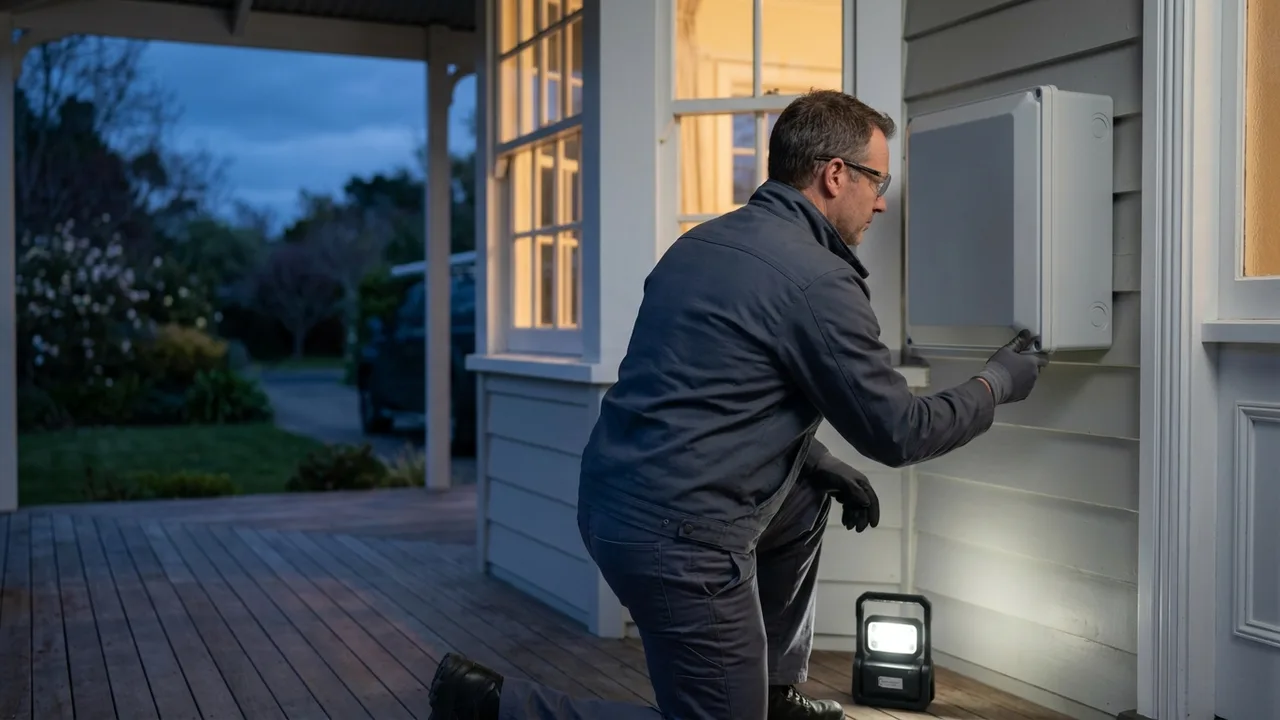
A licensed electrician can make a dead circuit safe and trace what caused it, so the power comes back and stays back. That is the job of an emergency electrician in Paddington, and it covers a switch that will not reset, half a house gone dark or a power point that smells hot. If you see smoke or flames, or someone has had a shock, call 000 first.
Emergency electrician Paddington: what to do first
The first thing that matters is whether anyone is in danger. Smoke, flames, a sizzling sound or a shock means call 000, leave the area and keep everyone clear.
If the situation is stable but the power is off, you are likely dealing with a fault rather than a street outage. A quick look at the neighbours' lights tells you a lot. If theirs are on and yours are off, the problem is inside your property.
An emergency call out is about two jobs in order. The electrician makes the hazard safe, then works out why it happened. A repair that skips the second step tends to leave you with the same dead circuit next week.
What counts as an electrical emergency
An electrical emergency is anything where the wiring could hurt someone or start a fire. A burning smell, a scorched or warm power point, buzzing from the switchboard, water near live fittings and exposed wires all qualify.
A total loss of power also belongs here when the safety switch will not reset, or when a household that depends on power cannot wait. A single dead power point or a light that has stopped working is usually less urgent, though a licensed electrician should still look at it.
When in doubt, treat a smell of hot plastic as serious. Switch off the circuit at the board if it is safe to reach and leave the rest to the electrician.
Safety switches that will not reset
A safety switch (also called an RCD, or residual current device) cuts the power in a fraction of a second when current leaks to the wrong place, such as through a person. When it trips and refuses to reset, it is doing its job.
The usual causes are a damaged appliance, moisture in a fitting, a rodent-chewed cable or ageing insulation. Unplugging everything and trying again can show whether an appliance is to blame. If the switch still trips with nothing plugged in, the fault is in the wiring.
The Queensland Electrical Safety Office recommends pressing the test button every three months. A switch that has never been tested may be the one that fails when you need it.
Making it safe, then finding the fault
A reset is not a repair. The electrician isolates the affected circuit first, so the rest of the house can keep running where that is safe.
Then comes testing. Insulation resistance readings, circuit-by-circuit checks and a look at the switchboard separate a bad appliance from a damaged cable or a failing breaker. This is how a fault is found rather than guessed at.
If the fault needs a part that is not on the truck, a good electrician leaves the circuit safely off and tells you plainly what is needed, rather than patching it to look finished.
Older Queenslander homes and electrical faults
Timber character homes, workers' cottages and terraces in Paddington and nearby suburbs such as Red Hill, Milton and Bardon often carry wiring from several eras. Rubber or cloth insulation turns brittle, ceramic fuses linger in old switchboards and extra circuits get added over the years.
Old wiring and modern loads do not suit each other, which is why these homes can end up with faults at awkward hours. An air conditioner, an induction cooktop or an electric car charger can push an ageing circuit past what it can carry.
Working in a timber house means care in roof spaces and under floors, where cables run through dry framing. A tradesperson used to Queenslanders pulls cable and opens walls with that in mind. If the board itself is the problem, a switchboard upgrade with safety switches across the whole house is the lasting answer.
What shapes the cost of an urgent call out
The price depends on how long the fault takes to find, the parts needed and whether the work is outside normal hours. A loose connection at a power point is a short job. A damaged cable inside a wall or a failed switchboard component takes longer.
You should hear what the job involves and what it will cost before wiring is touched, once the hazard is made safe. In Queensland, unlicensed electrical work is dangerous and illegal, so repairs belong with a licensed electrician.
Say which circuits are dead, what you can smell or hear and what the safety switch does when you reset it. Then use Request Help.
How it works
-
Say what is happening
Tell the electrician what has happened, what you can smell or hear and which parts of the house are dead. Anything dangerous gets switched off before they arrive.
-
Making it safe
On site, the faulty circuit is isolated so nobody is exposed to live wiring, a hot fitting or a leaking current.
-
Finding the fault
Testing narrows the problem to a circuit, a fitting, an appliance or the switchboard, rather than guessing and resetting.
-
Repair and paperwork
The fault is repaired or the part replaced, power is restored where it is safe, and installation work comes with a certificate of testing and compliance.
Scope in detail
- Safety switch that will not reset A switch that trips straight away is reacting to current leaking somewhere, and resetting it again and again only hides that.
- Half the house dead When some circuits work and others do not, the cause is usually one faulty circuit or a failed part at the switchboard.
- Burning smell or scorched power point Heat at a fitting points to a loose connection or overloaded wiring, which can start a fire if left.
- Lights that dim when the air conditioner starts This can mean a loose neutral or tired wiring, and the electrician confirms the cause on site.
- Storm and outage damage Water in a fitting or a damaged service line needs isolating before anyone touches it.
Emergency electrical repairs options
- Safety switch fault tracing Working out which circuit or appliance is leaking current, then repairing it.
- Dead circuit repairs Finding the break, the failed part or the overloaded run behind a circuit that will not come back on.
- Hot fitting replacement Isolating the circuit, then replacing damaged power points, switches or connections.
- Switchboard repairs Repairing or replacing failed breakers and worn parts that cut the power.
Emergency electrical repairs across Paddington
Frequently Asked Questions
What should I expect when I call an emergency electrician in Paddington?
How do I reset a tripped circuit breaker at my Paddington home?
Is it normal for a circuit breaker to trip in an older Paddington home?
Talk to a specialist
Power out or a switch that keeps tripping? Tell us what is happening and get it sorted.
Share the details and we will help you take the next step with confidence.